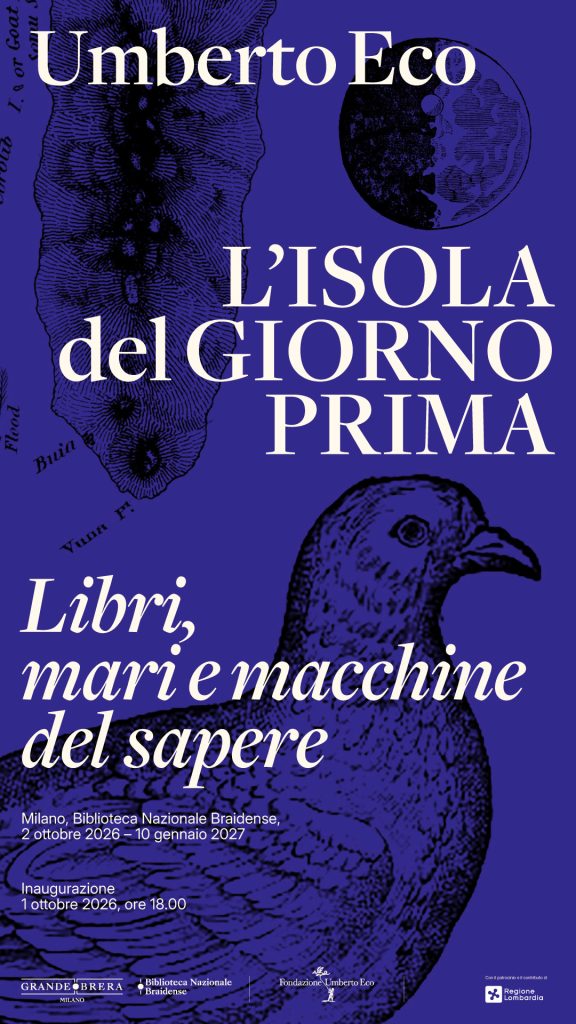
Novels are not just extended narratives bound and printed in codex form. They are also gateways to imaginative worlds that are constructed not just on the page but on a backstage composed of the sorts of materials that abound in archives: marked up source books, maps, reference tools, diagrams and drawings, paper slips, notes to self and others, inventories, rough and not-so-rough drafts.
Umberto Eco’s 1994 novel The Island of the Day Before is one such work. The novel is set aboard a seventeenth-century ship and follows its protagonist Roberto de la Griva as, in the course of a shipwreck, he confronts questions of time, space, geography, and identity, moving between adventure, philosophical reflection, scientific speculation, and dreamlike episodes. Shipwrecked on the far side of the international date line, De la Griva seeks to navigate to an island that lies on the other side of the divide, but to little avail.
The novel’s backstage includes not only Eco’s personal collection of well over one thousand rare and antique books, but also drawings, annotations, manuscripts, and reflections on the writing process itself. Before writing, Eco read. And he sketched, diagrammed, devised timelines, produced speculative images and illustrations. It is this world of preparatory imaginings and supports that the exhibition Isola del giorno prima – Libri, mari e macchine del sapere at the Biblioteca Nazionale Braidense in Milan brings to life. It does so by placing these analog materials in a conversation with:
- some of the scientific instruments referenced in the novel (on loan from the Museo Galileo);
- purpose-built interactive replicas of other instruments that allow visitors to rehearse De La Griva’s acts of discovery;
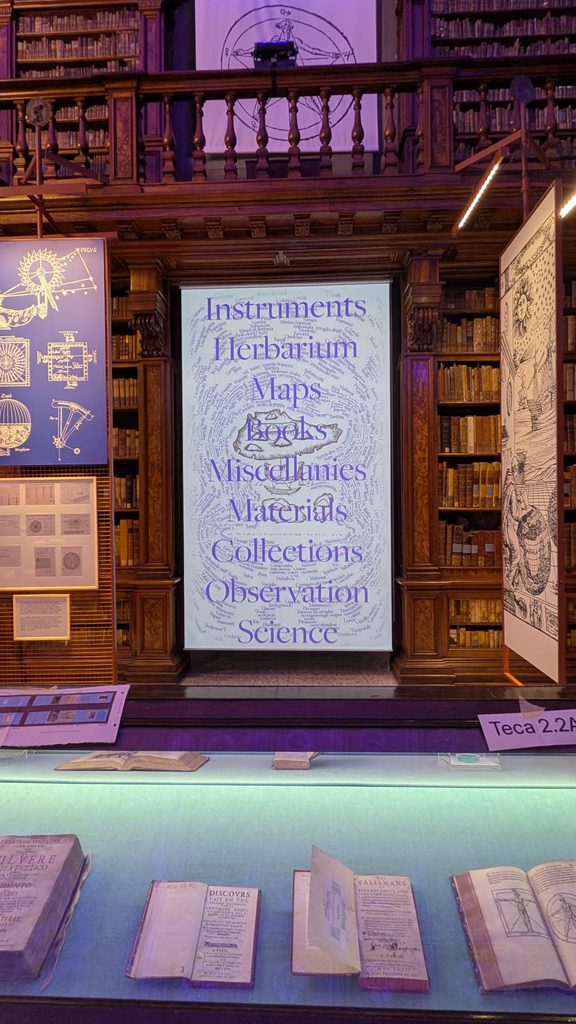
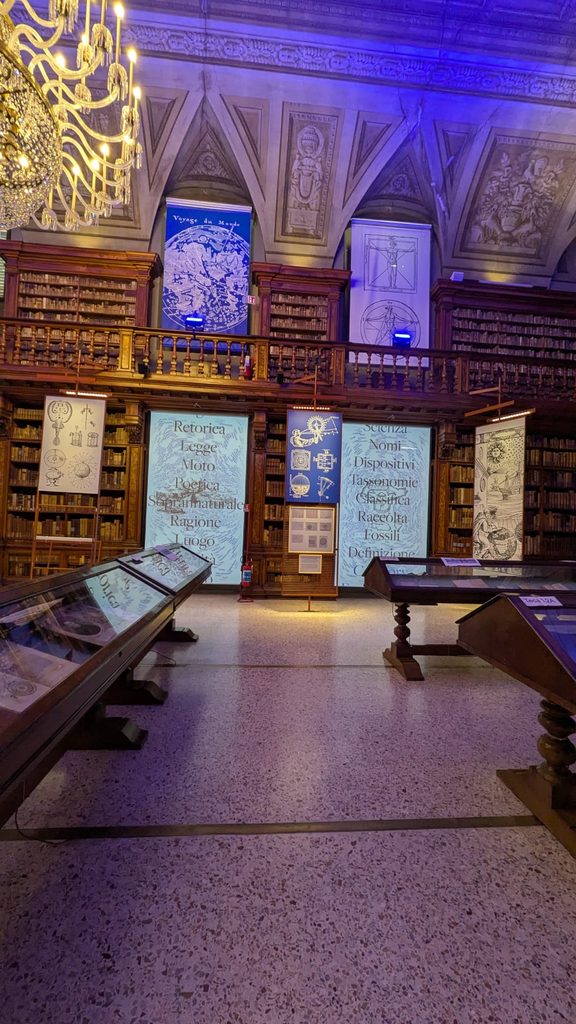
- five animations based on computational analysis of the novel (projected on screens within the historical library) in which key passages from the narrative are shown to navigate and swirl around period maps. Each of these projections hinge on key pairings within the text: between power and knowledge, inventions and discoveries, measurement and infinity, nature and artifice, lists and inventories;
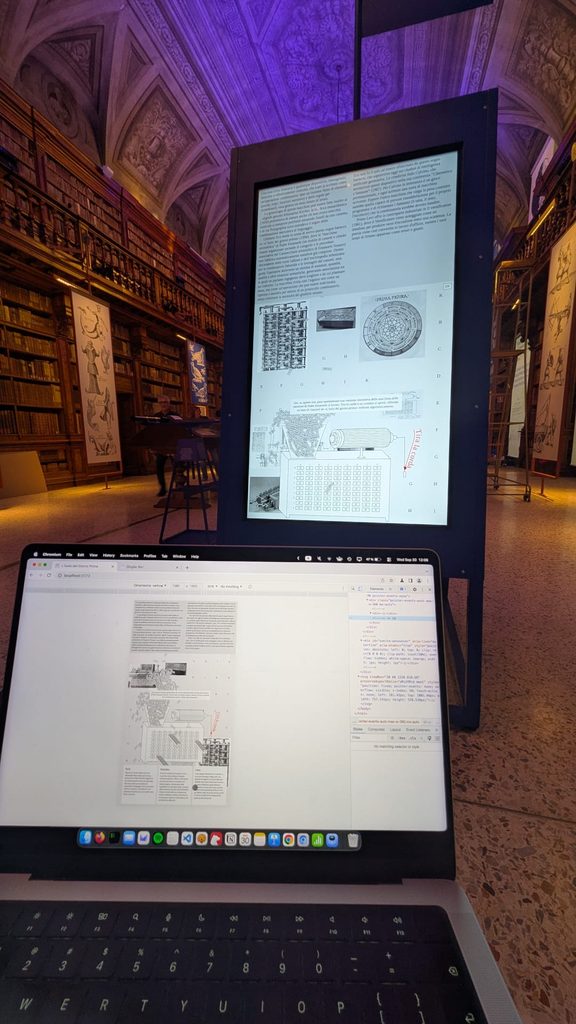
- an interactive “Aristotelian machine” modeled after that which the Jesuit father Emanuele devises for De la Griva (inspired in turn by Emanuele Tesauro’s Cannocchiale aristotelico and Athanasius Kircher’s Polygraphia nova et universalis); the recreated virtual machine offers visitors the possibility of interacting with Eco’s text pulling on a virtual chain that opens a drawer filled with an algorithmically sorted batch of quotations from the novel.
The third and fourth of these items were developed by metaLAB at Harvard and Berlin by my colleague Giacomo Nanni and myself; the overall exhibition was expertly curated by the Fondazione Umberto Eco. It is the first of what we hope will be a number of future such collaborations that seek to keep Eco’s world texts and ideas thriving and alive.
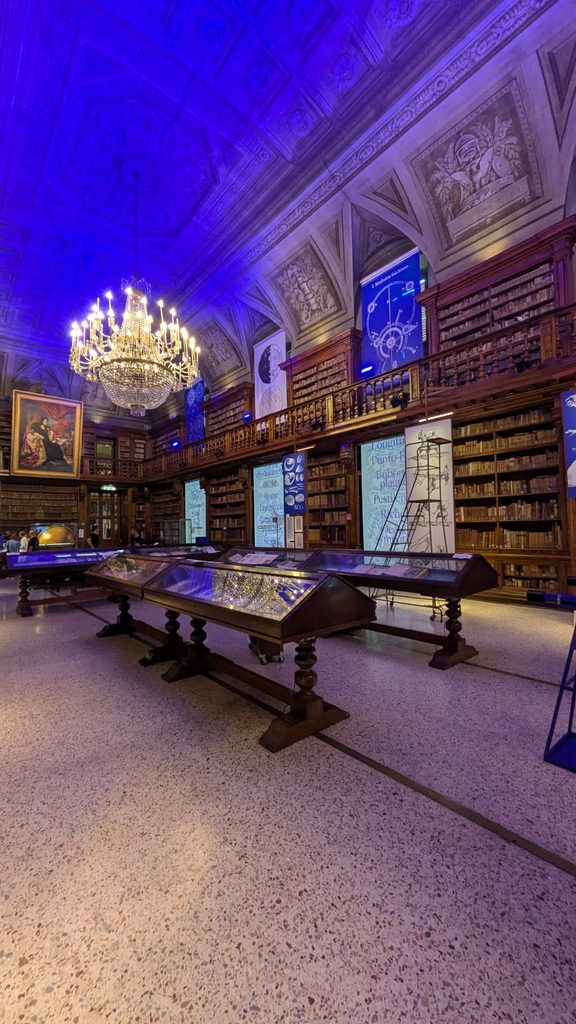
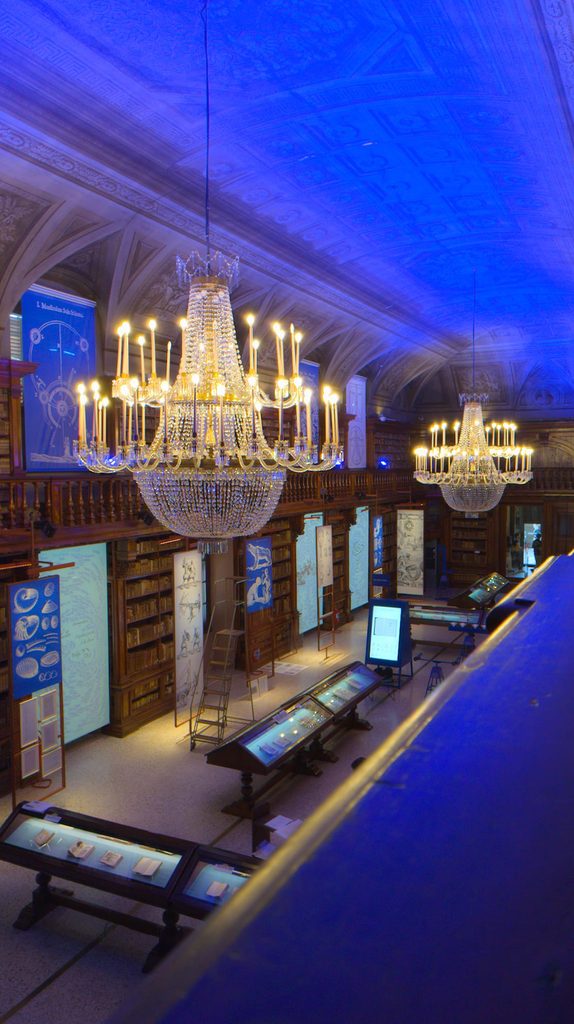
Here are some images of the installation:
Here are two of the five animations:
Here’s the exhibition poster: