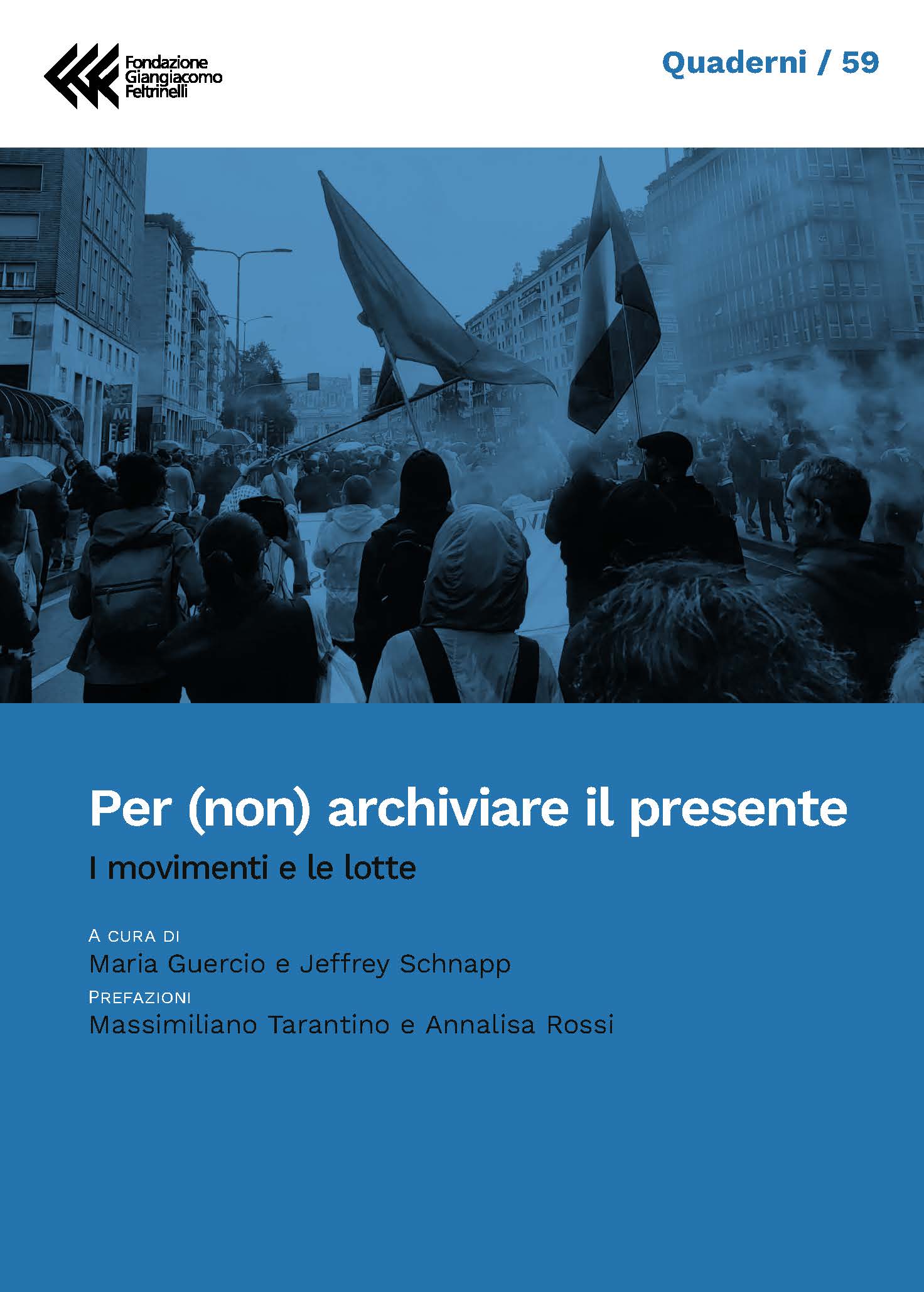
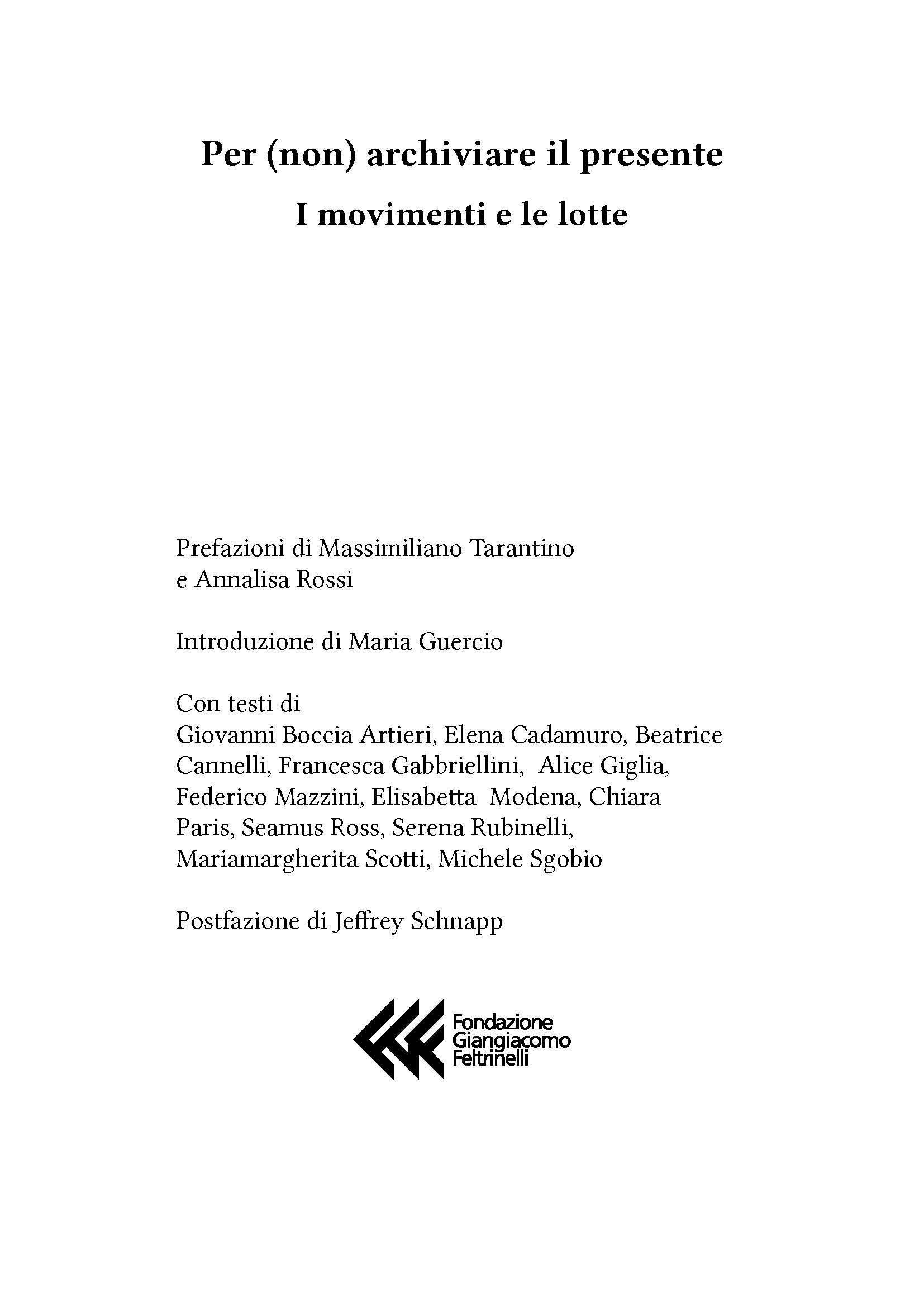
Last year, the Milan-based Giangiacomo Feltrinelli Foundation, on whose advisory board I serve, launched its important Archives of the Present project which sets out to collect and preserve documentation from contemporary social and political actors who are mobilizing for a more just society and more sustainable development. As Massimiliano Tarantino writes in his introduction to the volume that documents this initiative (an eBook of which the noted archivist Maria Guercio and I are the editors): “The fragmentation of social actors, the pervasiveness of the virtual, the abundance of information, and the volatility of materials have confronted us with crucial questions for the implementation of the project: Who are the actors of contemporary activism today? What sources should be preserved? How should they be chosen? How should they be preserved? In order to begin constructing valid answers, we realized—drawing on our decades-long experience in archiving—that one of the fundamental objectives of the project must be to share these questions with a community of diverse profiles: the very subjects of struggles and mobilizations, researchers, archivists, and institutions of culture and preservation.”
These struggles and mobilizations served as the subject for a number of public conversations over the course of the past year. They are now documented in the resulting eBook that Maria Guercio and I have edited which will be available free of charge at the website https://archividelpresente.fondazionefeltrinelli.it/ effective November 15, 2025.
The table of contents appears as follows:
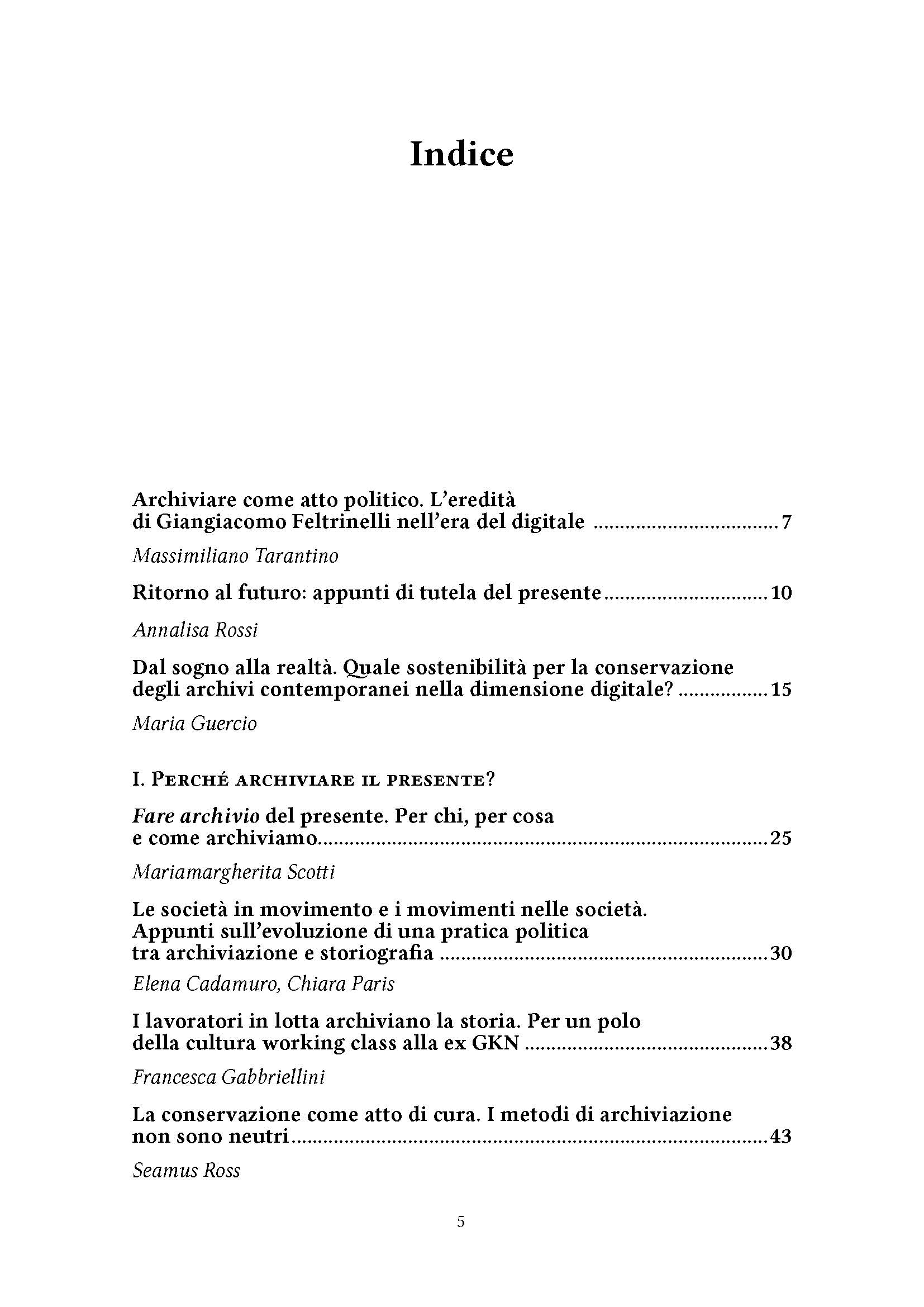
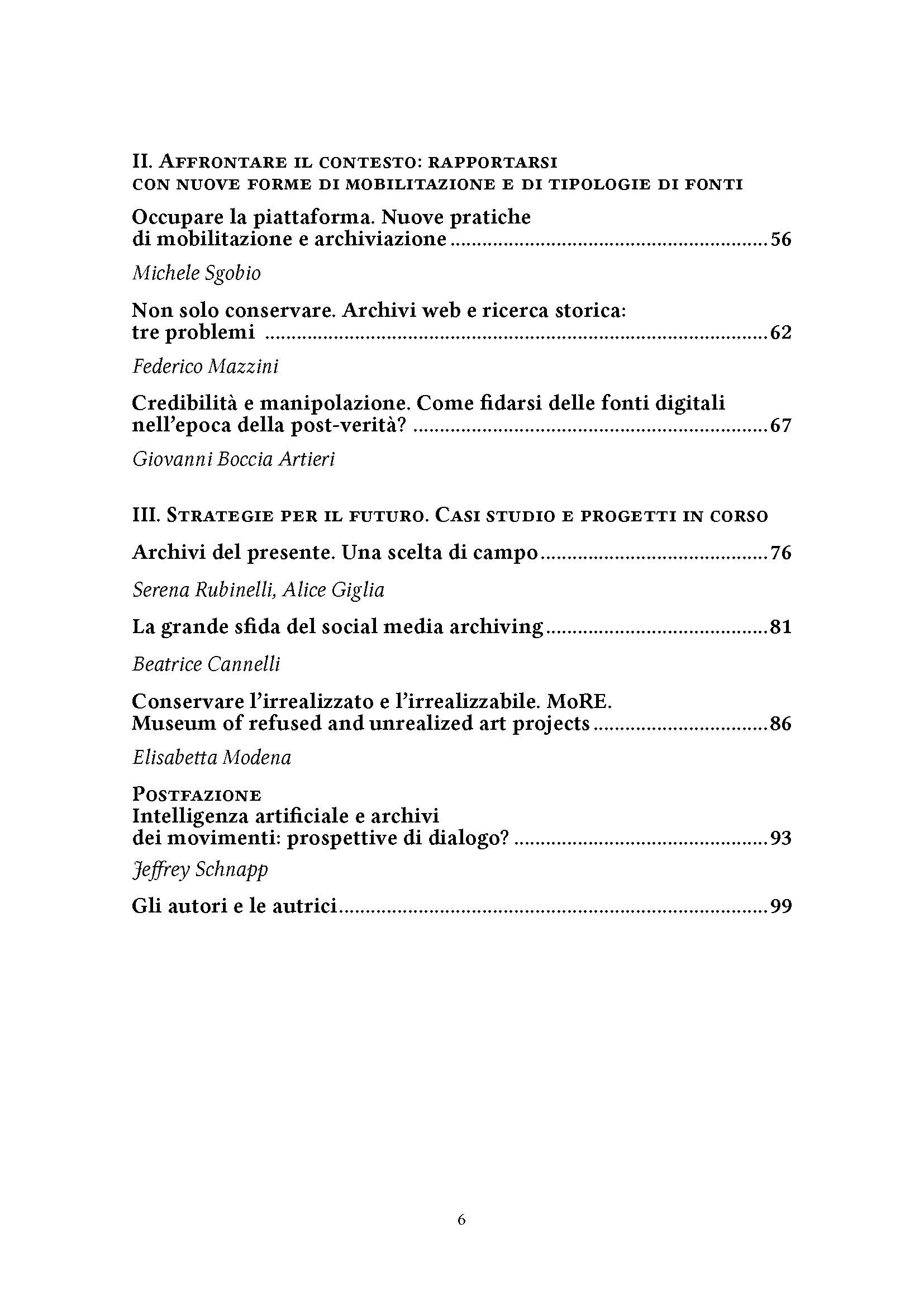
My own contribution to the volume’s postface begins:
Political movements instantiate movement. As such, the documentary trails they leave in their wake embrace ephemerality. Questions of documentation, historical memory, and preservation take a back seat to considerations of pace, impact, communicative efficacy, and affordability in the throes of social action. It’s ordinarily years or even decades later that archivists and historians undertake the laborious task of assembling collections of pamphlets, brochures, posters, flyers, newsletters, manifestos, and the like. The salvaging of administrative records and bodies of correspondence, the recording of oral histories require even greater spans of time, patience, and attention. The archive in construction then needs to be processed, structured, endowed with an intelligible architecture for future navigation. Sustained scholarly engagement with movement repositories, by its very nature, tends to be gradual in coming.
It ends:
Will movement archives retain their traditional identity as “places where public records are preserved for future study” as a result? Surely so, but as “future study” moves closer and closer to the “here and now” of social activism, archives themselves may increasingly be embraced as literal theaters of memory where community actions are performed.
For a selection of Archives of the Present that have currently been released, go to https://archividelpresente.fondazionefeltrinelli.it/.